Treclin 1% Gel

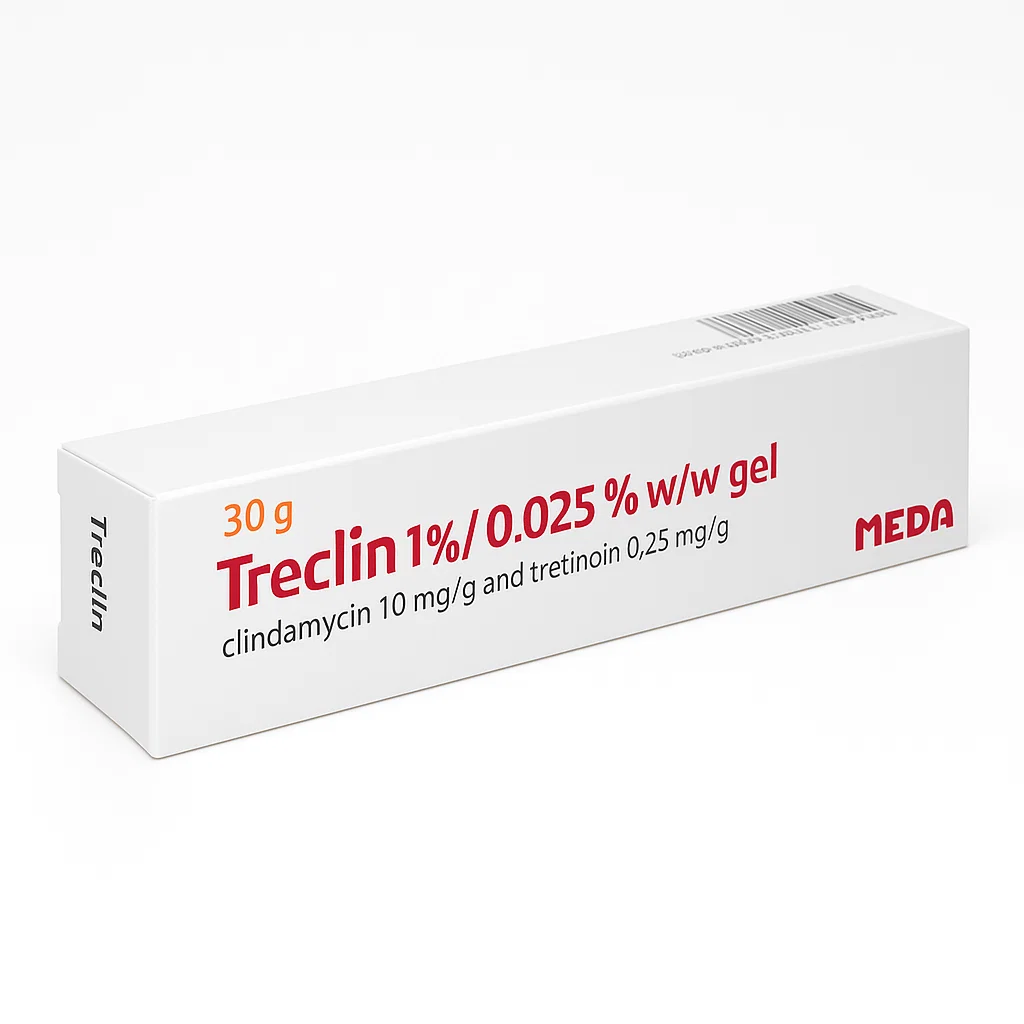
Treclin Gel is a dual-action prescription medication used for the treatment of moderate acne. It combines two active ingredients: Clindamycin, an antibiotic that reduces bacteria on the skin, and Tretinoin, a retinoid that helps prevent clogged pores and normalises skin shedding. It comes in 30g tubes and is a translucent yellow gel. The drug must be prescribed before use.

£36.99

Start Assessment
Download Patient Leaflet (PIL)

Directions

Use following the instructions provided or as directed by your healthcare provider. 

  • Apply Treclin gel once daily at bedtime. 
  • Wash the entire face with mild soap and warm water. Pat dry using a towel.
  • Use a pea-sized amount onto one fingertip, then gently rub the gel over the entire face.
  • If you miss a dose of Treclin, wait for the next dose at the usual time. 
  • Avoid contact with the mouth, eyes and mucous membranes, and injured skin.
  • In the event of accidental contact with the eyes, bathe with large amounts of water.
  • Do not exceed the recommended dose​.

Ingredients

Each gram of Treclin gel contains the active ingredients: 10 mg (1%) Clindamycin (as clindamycin phosphate) and 25 mg (0.025%) Tretinoin.

Treclin is made up of the following inactive ingredients purified water, glycerol, carbomers, methyl parahydroxybenzoate (E218), propyl parahydroxybenzoate (E216), polysorbate 80,disodium edetate, citric acid, anhydrous, butylhydroxytoluene (E321), and trometamol.

Warnings

Avoid using Treclin if you:

  • Have a history of hypersensitivity to Clindamycin or Tretinoin.
  • Have regional enteritis, ulcerative colitis, or a history of any antibiotic-associated colitis.
  • Have a history of skin cancer.
  • Have a history of acute eczemas, rosacea, and perioral dermatitis.
  • Have pustular and deep cystic nodular acne varieties.
  • Treclin should not be used during pregnancy

FAQ’s

Got A Question?

Need More Help? Get In Touch With Us

  • Treclin gel treats moderate acne in adults and adolescents over 12. It combines clindamycin (an antibiotic that reduces bacteria and inflammation) with tretinoin (a retinoid that helps unblock pores and improve skin turnover).
  • Apply a pea-sized amount once daily in the evening to clean, dry skin. Use it on the affected areas only, and avoid contact with your eyes, mouth, and any broken skin.
  • Yes, especially in the first few weeks. Common side effects include dryness, redness, peeling, and a burning sensation. These often settle as your skin adjusts. Use a gentle moisturiser and sunscreen daily.
  • Most people begin to notice improvements in their acne after 6 to 8 weeks, but full results may take up to 12 weeks. It’s important to continue using it consistently as prescribed.
  • Yes, but wait until the gel has fully absorbed before applying other products. Choose non-comedogenic (non-pore-clogging) skincare and makeup products to avoid worsening acne.